Outbound Brand Drops
TL;DR
- Outbound brand drops = intentionally "showing up" inside creator comment sections and feeds to siphon attention, not copy their content.
- This tactic matches how Gen Z/Alpha actually shop: inside TikTok/IG comments, not on your brand profile.
- Winning brands treat comments, stitches, and replies as creative surfaces, not afterthoughts—and then repurpose them back into ads.
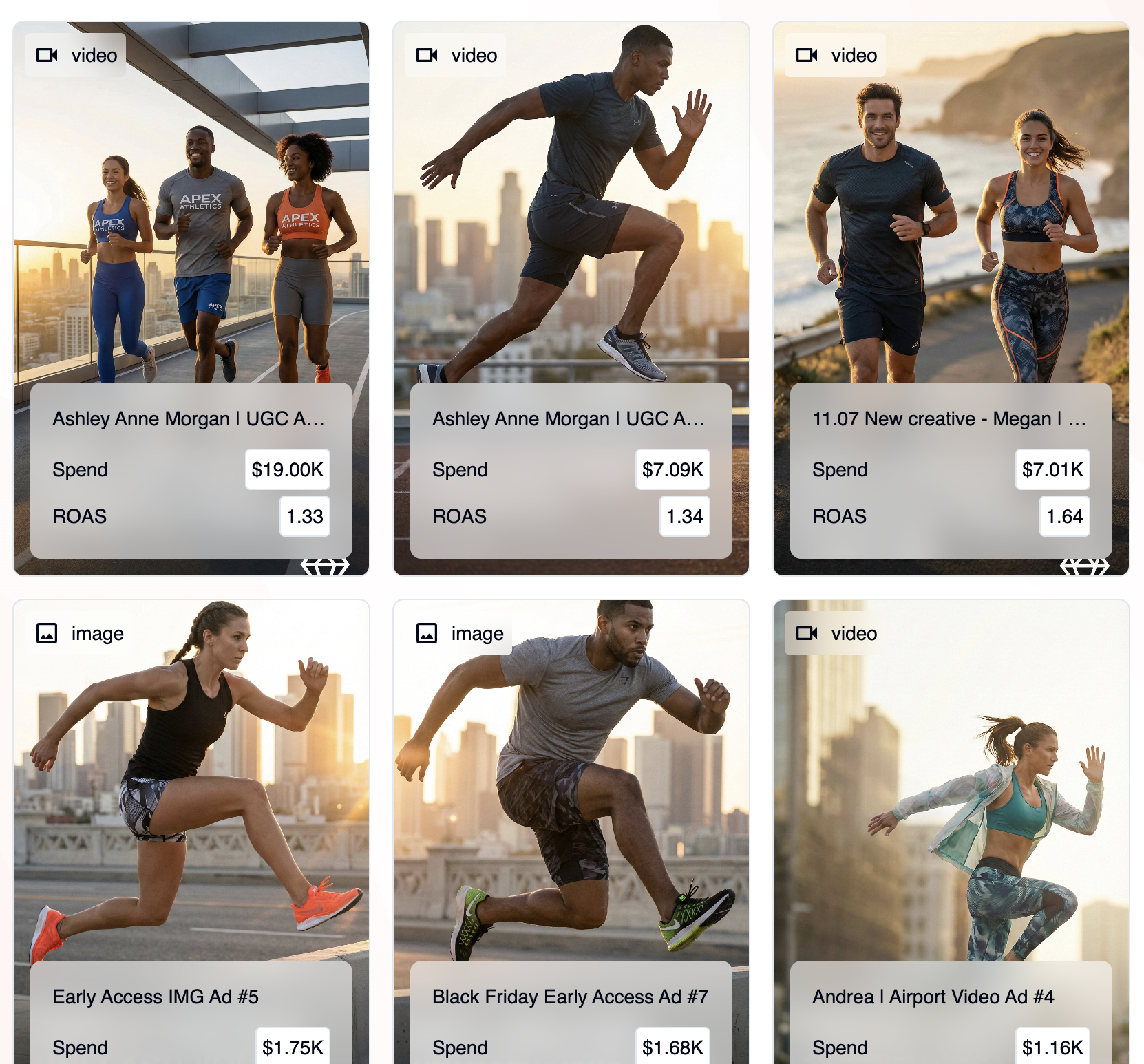
- Upspring analyzes these "micro-creatives" (comments, replies, stitches) and reveals which hooks, tones, and angles actually move people down the funnel.
- With AI-powered creative analytics, you can turn scattered outbound touchpoints into a repeatable acquisition system that feels native, not creepy.
Outbound Brand Drops: Steal Audiences from Creators Without the Creep
Paid social has a new power law: your best customers are already hanging out in someone else's comments.
Creators—big and small—own the attention your brand is paying Meta, TikTok, and YouTube to rent. Instead of only interrupting their audience with feed ads, outbound brand drops let you step into those conversations directly:
- Commenting on creator posts
- Replying with value in threads
- Stitching or duetting hot videos
- Answering questions that show purchase intent
Done well, it looks like community. Done poorly, it looks like spam.
This playbook breaks down how to run outbound brand drops that steal audiences without feeling creepy—and how Upspring's AI-first creative analytics turns those tiny interactions into scalable ad patterns.
This guide is written for a global audience of performance marketers, creative strategists, agencies, and DTC teams.
What Are Outbound Brand Drops? (And Why They Work Now)
Definition – Outbound Brand Drops
A structured, repeatable process where brands proactively engage in public creator spaces (comments, stitches, replies, Q&As) with creative that:
- Adds value (answers, recommendations, jokes, receipts)
- Signals brand POV and product fit
- Intentionally redirects attention back into your funnel
Instead of waiting for users to see or comment on your ads, you:
- Go where the demand already is (creator feeds, niche communities)
- Hijack attention with native-feeling creative
- Turn the best moments into ad concepts, hooks, and overlays
Why it matters in 2025+
- Gen Z/Alpha increasingly search on TikTok/IG, then scroll comments before buying.
- Comment sections signal real problems and objections—gold for creative strategy.
- Creator trust is higher than brand trust; proximity to creators = borrowed credibility.
- Organic reach is volatile; outbound gives you a systematic, controllable surface.
Outbound isn't "community management 2.0". It's creative strategy in the wild.
The Psychology: Why Outbound Comments Convert
Outbound brand drops work because they align with how people experience feed content:
- Social proof scanning
Users scan comments to see: "Is this product real? Does anyone I trust use it?"
- A sharp, useful brand reply feels like "insider confirmation," not an ad.
- Reciprocity & helpfulness
When a brand solves a problem in a comment—link, answer, mini how-to—users feel helped, not sold to.
- Creator adjacency
Your logo and voice appear right under a trusted creator's face, borrowing their context and credibility.
- Pattern interrupt without production
Among low-effort comments ("🔥", "need this"), a thoughtful or funny brand drop naturally stands out.
The Outbound Brand Drop Framework (4R Model)
Use this simple 4-step model to design and scale outbound activity:
1. Reveal – Find the right creators & threads
- Mine TikTok, Reels, YouTube Shorts for:
- Product-adjacent reviews ("I hate shaving irritation")
- Category discussions ("Best carry-on luggage?")
- Problem rants ("My back hurts from my office chair")
- Prioritize creators whose comments are full of questions, objections, and hacks.
With Upspring
- Use competitor creative analysis to see which creators and angles are already converting in your category.
- Identify recurring hooks and problems from winning competitor ads, then find matching conversations in creator feeds.
2. Respond – Craft native, high-signal comments
Treat each comment like a micro-UGC script:
- Lead with a hook:
- "Unpopular opinion: '[X hack]' is why your [problem] isn't fixing."
- Add specific value:
- 1–2 actionable tips, or a concise explanation.
- Soft brand drop:
- "We built [product] because we kept seeing this exact issue. Quick breakdown:"
- Clear path:
- "We tested this on 1,200+ customers—DM 'BACK' if you want the full setup."
Global example
Skincare brand under a creator's "retinol purge" video:
"Most purging is actually barrier damage, not 'it's working'. 3 checks: 1) tightness after cleansing 2) stinging with plain moisturizer 3) new redness around nose/eyes. That's why we stripped our serum to 3 barrier-first actives. If any of these sound like you, patch test before increasing retinol."
With Upspring
- Import your outbound screenshots / clips into Upspring's Creative Library.
- Upspring tags comments by tone, promise, problem, and hook style, then correlates those patterns with downstream ad performance.
3. Repurpose – Turn comments into ad creatives
Your best outbound comments are proven hooks. Don't let them die in a thread.
Turn high-engagement comments into:
- Dynamic overlays:
- Screenshot the comment + place it as top-of-video text in a UGC ad.
- Narrated scripts:
- "Here's the exact comment we left on [creator]'s video when they talked about…".
- Carousel frames:
- Slide 1: Creator post screenshot
- Slide 2–4: Your comment broken into steps
- Slide 5: Product demo + CTA
Meta / TikTok creative pattern
"Top Comment Turned Ad": ad opens with a blurred screenshot, zooms into your comment, then cuts into a face-to-camera explanation.
With Upspring
- Upspring's video analysis detects:
- Which comment-overlay formats (screenshot style, placement, animation) drive higher hook retention.
- Which problems/phrases from your comments correlate with better CTR and CVR across Meta, TikTok, and Shorts.
4. Repeat – Systematize & scale what works
Build a repeatable outbound engine:
- Create comment archetypes:
- "Myth-buster", "Mini tutorial", "Honest brand confession", "Data drop", "Meme reply".
- Assign owners:
- Media + creative lead sets outbound themes.
- Social or community manager executes daily.
- Performance marketer pulls results into dashboards.
- Weekly loop:
- Export top-engaged outbound comments.
- Push into Upspring for pattern detection.
- Brief 2–3 new ad concepts built from those winning angles.
How Upspring Makes Outbound Brand Drops Measurable
Most teams can't connect "comment we left under a creator" to "ad we scaled to $50k/month". Upspring closes that loop.
1. AI-powered creative tagging for micro-creatives
Upspring treats comments, stitches, and replies as creatives, not noise. It auto-tags:
- Hook style (hot take, question, social proof)
- Emotion (relief, FOMO, outrage, curiosity)
- Format (screenshot overlay, text reply, facecam answer)
- Product angle (pain relief, speed, price, authority, lifestyle)
2. Performance context across platforms
You can see:
- Which outbound-inspired creatives lower CPA / raise ROAS on Meta
- Whether comment overlays work better on TikTok vs. Reels
- How fast those patterns fatigue versus your standard UGC
3. Competitor outbound intelligence
Upspring's competitor ad breakdowns reveal:
- Brands already using comment screenshots or creator replies in ads
- The narratives and angles they're leaning into
- Structural patterns: pacing, placement of overlays, CTA type
You don't have to guess which outbound patterns to test—you can steal what the market already proved and adapt it.
Practical Playbook: Launching Outbound Brand Drops in 14 Days
Week 1 – Discovery & Setup
- Map demand spaces
- Identify 20–30 creators whose content mirrors your top problems/uses.
- Define 3–5 outbound themes
- E.g., "Brutally honest truths", "Behind-the-scenes fixes", "We built this because…".
- Create a comment bank
- 20–40 pre-approved, customizable comment templates.
- Connect to Upspring
- Import your recent ads + any early outbound-inspired creatives.
- Let Upspring surface existing winning hooks to mirror in comments.
Week 2 – Execution & Feedback
- Post 10–20 outbound comments/day across platforms.
- Track: likes, replies, profile visits, DMs, saves.
- Convert top 5 comments into three ad formats:
- UGC with overlay
- Static or carousel using screenshots
- Scripted explainer referencing the comment
- Run low-budget tests (~$50–$100/day per concept, GEO-adjusted).
- Use Upspring's Insights Feed to:
- Flag the comment-derived creatives with above-benchmark CTR/CVR.
- Cluster them by patterns (tone, problem, promise).
- Turn patterns into next week's outbound/comment variations.
FAQs – Outbound Brand Drops & Creative Strategy
Are outbound brand drops just influencer marketing under a new name?
No. Influencer marketing pays creators to feature you. Outbound brand drops ride on existing creator content and community spaces through comments, replies, and stitches—with or without a formal partnership.
Won't audiences find this creepy or spammy?
They will if your comments are:
- Generic ("Check out our site!")
- Repetitive copy-paste
- Off-topic self-promo
They won't if your comments are:
- Specific, useful, or funny
- Clearly written by humans
- Contextual to the creator's content
Upspring helps here by showing which tones and formats actually get positive engagement instead of reports/blocks.
How do I measure outbound's impact on performance?
- Direct: Comments leading to DMs, replies, link clicks, unique codes.
- Indirect: Outbound-derived creatives that outperform baselines in paid campaigns.
With Upspring, you:
- Tag those creatives as "Outbound-derived"
- Compare CPA, CTR, ROAS vs. your account average
- Identify element-level drivers (comment overlay, hook phrasing, problem framing)
Does this work for non-DTC brands?
Yes. B2B, apps, and services can all use outbound:
- Replying under "day in the life" or "stack" videos
- Correcting myths about categories
- Offering mini-playbooks or templates in the comments
The same principle holds: show up where the conversation is already happening and then track the creative patterns that win.
Glossary of Key Terms
- Outbound Brand Drops – Systematic brand participation in creator comments, replies, and stitches to capture attention and drive demand.
- Creator Adjacency – Leveraging proximity to creators' content/communities to borrow trust and attention.
- Comment Overlay – Using a screenshot or recreation of a comment as text on top of an ad creative.
- Hook – The opening line/visual that stops scroll and earns 1–3 seconds of attention.
- Creative Fatigue – Performance decay as audiences repeatedly see the same creative.
- Creative Pattern – A repeatable combination of elements (hook, structure, tone, visuals) that correlates with performance lift.
Internal Linking Recommendations
When publishing this article, link to:
- A guide on creative pattern detection – from the section "How Upspring Makes Outbound Brand Drops Measurable" where we discuss pattern clustering.
- A post about competitor creative research – from "Competitor outbound intelligence" to show how to spy on and adapt competitor comment-based creatives.
- A playbook for Meta ads creative strategy – from "Repurpose – Turn comments into ad creatives" to help readers deploy comment-derived assets specifically on Meta.
Outbound brand drops turn the wild west of comments and creator feeds into structured, measurable creative R&D. With Upspring's AI-first creative analytics layer, you don't just show up—you learn why it works, and scale the patterns that steal audiences without the creep.